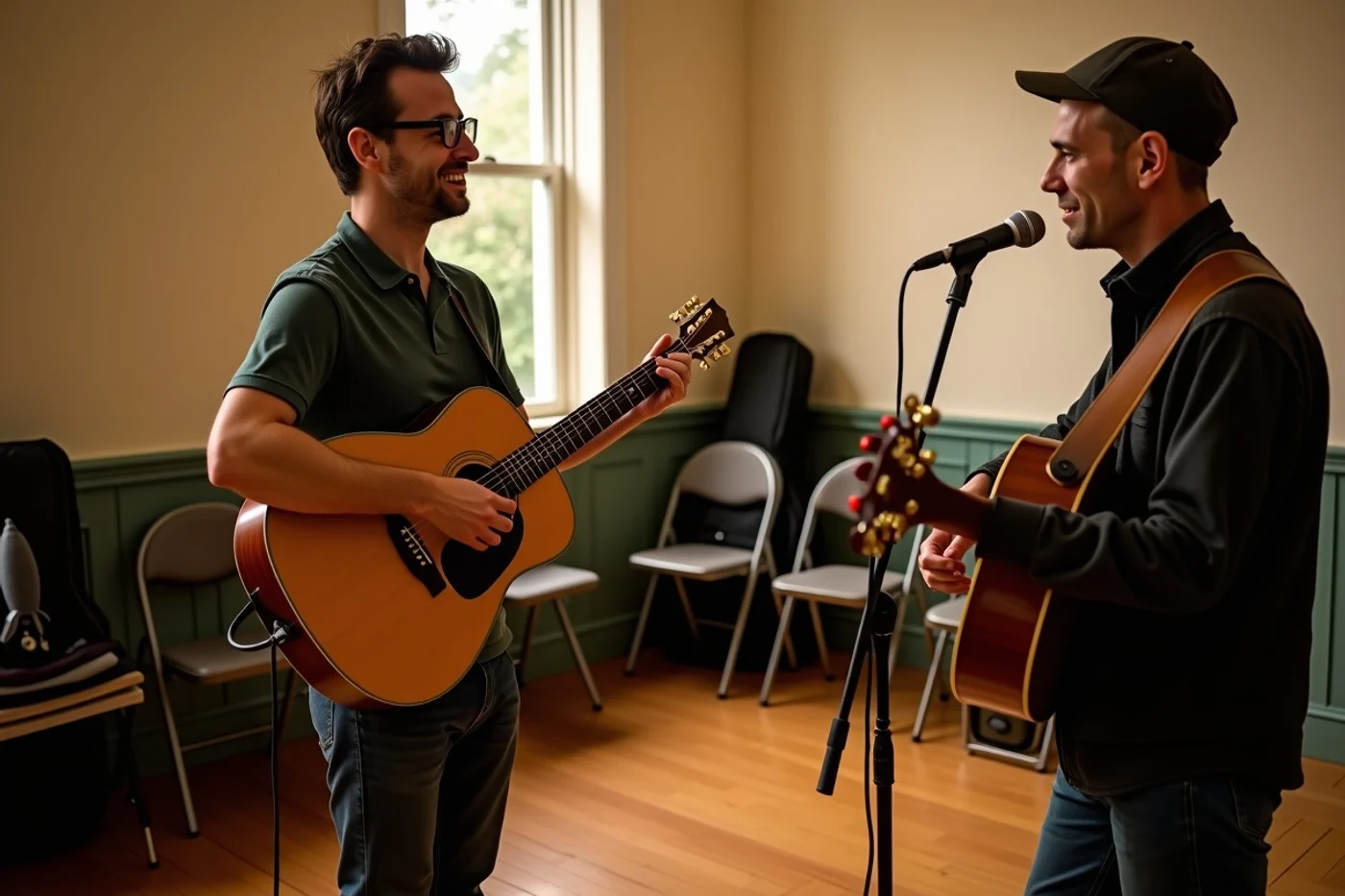
Musicians are easiest to meet in places where music gives people something real to discuss before anyone has to signal romantic interest. Start with recurring open mics, classes, jam circles, volunteer crews, and local online groups; each puts a set, song choice, or shared task at the center of the exchange. Picture a weekly open mic: after seeing the same guitarist, host, and regulars for several weeks, you know which performances sparked discussion and who stays to help reset the room.
Published by Datewise Guide
Music communities create natural reasons to return and recognize people
A one-night show asks strangers to create instant momentum in a loud, crowded room. Recurring music settings work differently. Names become familiar, people recall a set from last week, and small conversations have somewhere to go when the next event arrives. You learn who plays, who listens closely, who helps organize, and which part of the local scene genuinely interests you.
Familiarity does not create romantic interest. It does make the social setting less artificial, because you are participating in an activity with its own purpose. Attend a songwriter circle because the songs interest you. Join a community chorus because you want to sing. That stance prevents every performer, bandmate, or volunteer from becoming a dating prospect the moment they arrive.
At a concert or open mic, timing matters more than a clever line
Speak between sets, during a break, or after the event when someone has stepped away from the stage area. A performer packing equipment, a host managing the lineup, and a sound person solving a problem are working. Leave them alone until the task is finished.
Offer a brief reaction to the event, then let the exchange breathe. When the answer is short or their attention returns to friends, gear, or the door, end it cleanly and move on. No clever recovery is needed.
Classes, jam sessions, and production work
Music classes create conversation through repetition and cooperation. A vocal workshop, beginner percussion class, songwriting session, community choir, or amateur ensemble gives people a reason to compare notes after practice. Instrument-focused gatherings do the same: a bluegrass jam, hand-drum circle, or casual guitar meetup puts attention on listening, timing, and learning songs together. Conversation grows around what happened in the room, not around a stranger's dating status.
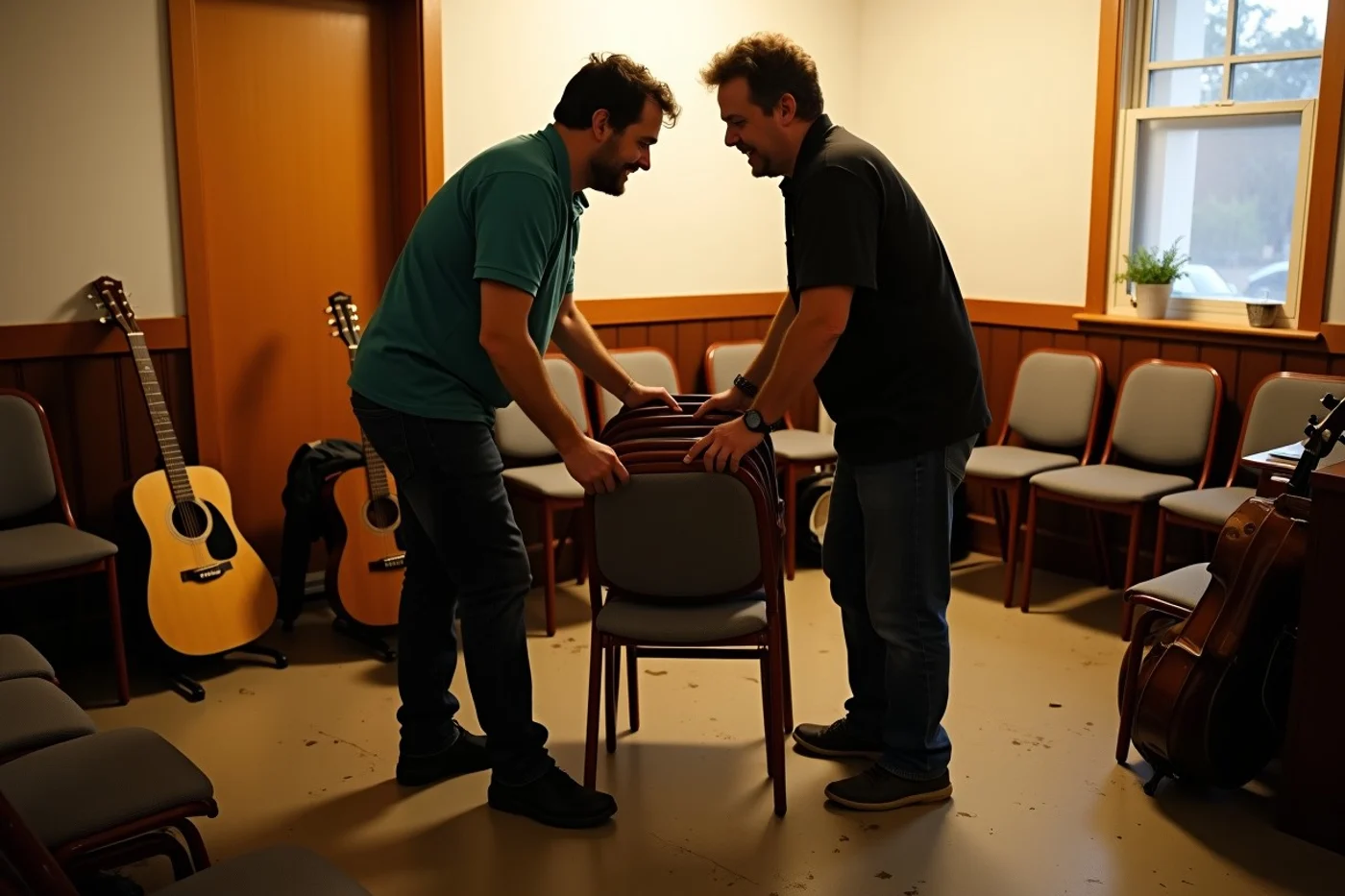
Behind-the-scenes roles offer another route. Help with chairs before a community concert, check in attendees at a nonprofit music event, assist with rehearsal setup, or volunteer on a small event crew. These jobs place people side by side with a shared deadline and a clear contribution. They also reveal whether someone shows consideration when plans change or cleanup runs late. Arriving only to hunt for introductions is obvious and tiresome; taking on a real task gives you a legitimate place in the community.
Workshops and short courses suit people who prefer a defined beginning and end. The conversation often starts while comparing workshop notes, waiting for a session to resume, or discussing a performance afterward. That is enough. A lasting connection needs no grand entrance.
Online music groups can lead to local introductions
- Setting: Online fan groups What It Supports: Discussion of albums, tours, recordings, and local shows before meeting anyone in person. Limit To Remember: Shared fandom says little about day-to-day values, relationship expectations, or basic courtesy.
- Setting: Musician and instrument communities What It Supports: Finding jam sessions, workshops, collaborators, and people who understand the work behind playing. Limit To Remember: Some members are there strictly to make music. Treat a collaboration space as a collaboration space.
- Setting: Local event forums What It Supports: Joining public gatherings where several people attend and conversation has a built-in subject. Limit To Remember: Read the event details and group norms before posting or contacting members directly.
- Setting: Dating profiles that mention music What It Supports: Clear romantic intent with an immediate topic for a first exchange. Limit To Remember: A favorite artist is an opening, not proof of deep compatibility.
What makes a music-related opener feel respectful?
Start with what the person has already chosen to put in front of you. At an event, ask what they thought of a set or which part of the bill brought them out. At a class or jam, ask about the instrument they carried, the arrangement being rehearsed, or where they learned a technique. A recommendation request also works when it has a real purpose: ask for an album, local act, or genre entry point connected to the night. These subjects let the other person answer at the depth they choose.
The best questions leave the person free to be brief. Avoid treating a performer like an exhibit, fishing for personal lyrics, or offering an uninvited critique of their playing. Compliments land better when they name a genuine element of the performance, such as an arrangement, a song choice, or the energy of a set, without demanding a response.
Interest shows itself through participation in the exchange: they add detail, ask something back, remain after the immediate topic is covered, or return to the conversation later. A clipped reply, a turned focus, or attention fixed on an unfinished task calls for a courteous exit. Respect shows most clearly in how readily you let the conversation end.
Invite connection without turning every musician into a prospect
Musicians often attract people who want access to a scene: introductions, guest lists, lessons, paid work, or social status. Skip questions about what someone earns from music, who they know, or whether they can get you into an event. Those questions turn a shared interest into a transaction fast. Put your attention on the music and the setting you actually share. Listen during performances. Do your assigned volunteer task. Show up prepared for rehearsal. A community notices who contributes and who treats it as a hunting ground.
A follow-up belongs after mutual engagement, not after every pleasant exchange. Ask whether the person would like to continue talking before the next gathering, meet for coffee after a future class, or exchange a limited contact method tied to the event. Their response sets the terms. A clear decline, a vague deflection, or no follow-up ends the pursuit; greet them normally the next time and let the shared music space remain comfortable for everyone.
A realistic first connection
In a hypothetical monthly song circle, two attendees speak briefly after several gatherings about arrangements they both enjoyed. After another easy conversation, they exchange an email address used for community events and agree to meet at a café near the venue before the next circle. The follow-up is simple: more time to talk about music, with no claim that a good conversation already means more.
The strongest setting is one you would attend even without a date in mind. Real curiosity gives music communities their social value, and a clean exit matters as much as a warm opening.