
For plus-size singles in Newark, the strongest dating app is the one that combines an active nearby pool with firm control over who contacts you and what they can see. Start by comparing WooPlus, Bumble, and Hinge on profile culture, local discovery, blocking, reporting, and location settings—not on branding alone.
Published by Datewise Guide
Respectful dating design starts with how bodies are represented
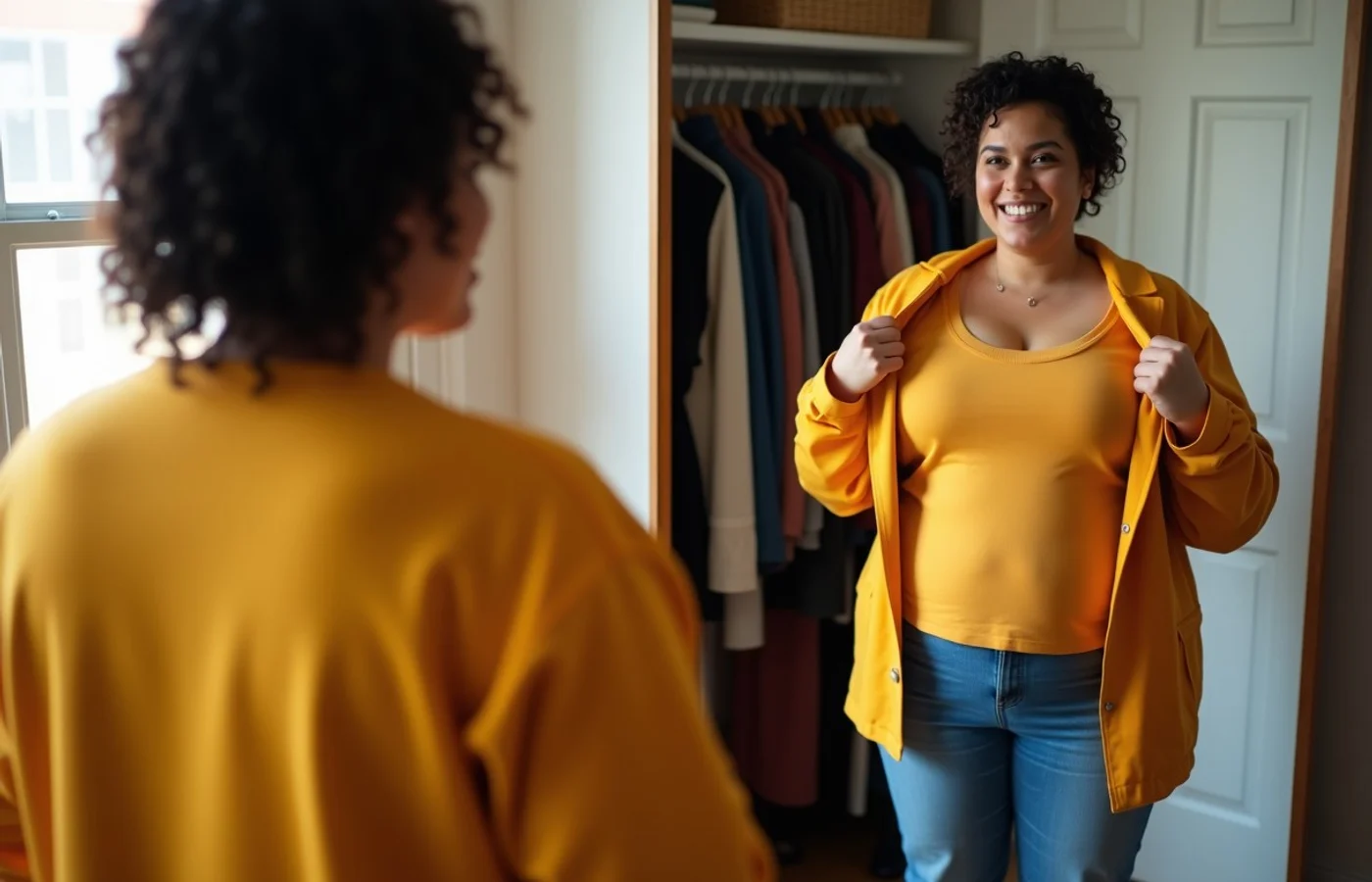
A body-inclusive dating design lets someone present a full life without declaring, defending, or disguising their size. Look for profile fields that make body descriptors optional, prompts that foreground relationship intent and daily interests, and filters that avoid reducing someone to a single trait. A plus-size-focused service such as WooPlus belongs in a Newark comparison because its audience focus addresses body size directly. Bumble and Hinge belong as mainstream checks: compare whether their prompts and discovery settings let you lead with the same information and keep the same control. A cheerful inclusion statement on a landing page is not enough. Look for a profile feed and inbox where people describe themselves as whole adults, ask grounded questions, and avoid making someone’s body public commentary. Anyone who wants to name size can do so plainly; no disclaimer is required. Read a handful of local profiles before putting much effort into photos or prompts. Bios demanding a body type, backhanded compliments, and sexualized remarks tell you plenty about the crowd, even when an app’s design looks polished.
A Newark match pool is useful only when local discovery remains active
Begin with a tight Newark distance setting, then widen it in measured steps when the feed becomes thin. A broad radius that fills the screen with distant accounts does not demonstrate local interest. Test whether the app shows people near Downtown Newark and Ironbound without asking you to publish an exact home, workplace, or regular route.
Use neighborhood names only for general conversation once trust exists. For an early meeting, Newark Penn Station offers an independent transit reference point; no new match needs to know where you started your trip or provide your ride.
Photos can communicate confidence without inviting objectification
Choose current photos that show what meeting you will actually look like: a clear face image, a full-length photo, and a few scenes connected to your life. A meal with friends, a museum visit, a cooking project, a concert, or a favorite weekend activity gives a prospective match something human to respond to. Heavy editing, strategic cropping, or images old enough to create a surprise at a first meeting drain energy from every later conversation. Accuracy is not an apology.
Profile prompts should carry the rest of the introduction. Name the kind of connection you seek, a few interests that shape your week, and the qualities that hold your attention in conversation. Body size can be part of a profile when it feels relevant to you, but it does not have to organize the profile. A short note asking for respectful communication is fine; an entire bio built to fend off rude strangers gives them far too much space before they earn a reply.
Inclusive branding does not guarantee respectful member behavior

Brand language is marketing. Community culture appears in the profiles you encounter, the first remarks people send, and the route an app offers when somebody crosses a line. Profiles with completed prompts, clear intentions, and comments about shared interests signal more care than a feed dominated by body assessments, empty bios, or sexual demands.
Check the reporting flow before relying on it. It should be easy to identify the category of misconduct, submit relevant details, block the account, and understand what happens to the conversation afterward. An app that celebrates inclusion while burying those functions fails an elementary test. Use the first batch of profiles and interactions to judge the local crowd; bad behavior never has to be tolerated.
Review contact controls before responding to a new match
Start with the settings screen. On every candidate app—WooPlus, Bumble, and Hinge—find the block and report functions, controls over who finds your profile, location settings, message-request or match-only access rules, and the path for deleting the account. Do this before a new match gets your attention. Account holders should know whether strangers can find the profile in discovery, whether it can be paused or hidden, and whether contact ends cleanly after a block.
Location calls for firm limits. An app can identify a broad dating area without revealing an address, apartment building, workplace, or habitual route through Newark. Avoid connecting public social accounts until the person on the other side has earned more trust; those accounts often expose names, friends, routines, and places an app profile need not reveal. Account deletion matters too. Locating the exit before entering a conversation is not romantic, but a service that hides it asks for more commitment than it has earned.
Harassment patterns require a fast, documented response
Objectifying remarks, requests for intimate images, repeated contact after a refusal, and a new account that appears after a block all call for the same response: end contact, preserve the material, report the account, and block it. Do not debate whether a body-focused insult was intended as a compliment. The sender’s intent does not repair the conduct. Save screenshots that show the profile, account name, dates, and messages before reporting, particularly when the person threatens, impersonates, seeks money, or tries to move you quickly off the app.
Financial requests and elaborate emergencies belong in the same refusal pile. The Federal Trade Commission provides romance-scam guidance, and suspected internet-enabled fraud or crime can be reported to the Internet Crime Complaint Center. For an immediate threat or concern about physical safety in Newark, contact emergency services or the Newark Department of Public Safety. Reporting is appropriate when someone ignores a clear refusal.
Which evidence belongs in the final Newark app shortlist?
Give each app zero, one, or two points for five areas: active Newark-area discovery, respectful profiles and early interactions, clear reporting and blocking, limits on unwanted messages, and your comfort using its settings. A total of ten offers a clean comparison without pretending that one app suits every person.
Drop any service that scores zero on reporting, blocking, or location control, even if it supplies more nearby faces. After a limited trial, keep the app where conversations take more of your time than managing the app’s failures.
A crowded app with weak contact controls costs attention and peace of mind. Choose the service where your profile can be complete, your location stays broad until you choose otherwise, and an unwanted contact is simple to remove. Respectful treatment is the baseline for dating in Newark, not an optional premium feature.
Where the factual details come from
- Internet Crime Complaint Center — Internet Crime Complaint Center
- What To Know About Romance Scams — Federal Trade Commission
- Federal Trade Commission — official information — Federal Trade Commission
- Department of Public Safety — City of Newark
- Newark, New Jersey — official information — Newark, New Jersey
- WooPlus — official information — WooPlus