
Chesapeake dating searches run into a local fact that a map radius often hides: a promising match may live in another part of Hampton Roads and still be easier to meet than someone nearby at the wrong time. For Black singles in Chesapeake, begin by comparing Black-focused services such as BLK and BlackPeopleMeet with general services including Hinge, Match, and eharmony. The deciding criteria are local profile depth, stated relationship intentions, travel expectations, account quality, and how a conversation develops after matching—not a national user total.
Published by Datewise Guide
A Chesapeake search needs room for real travel patterns
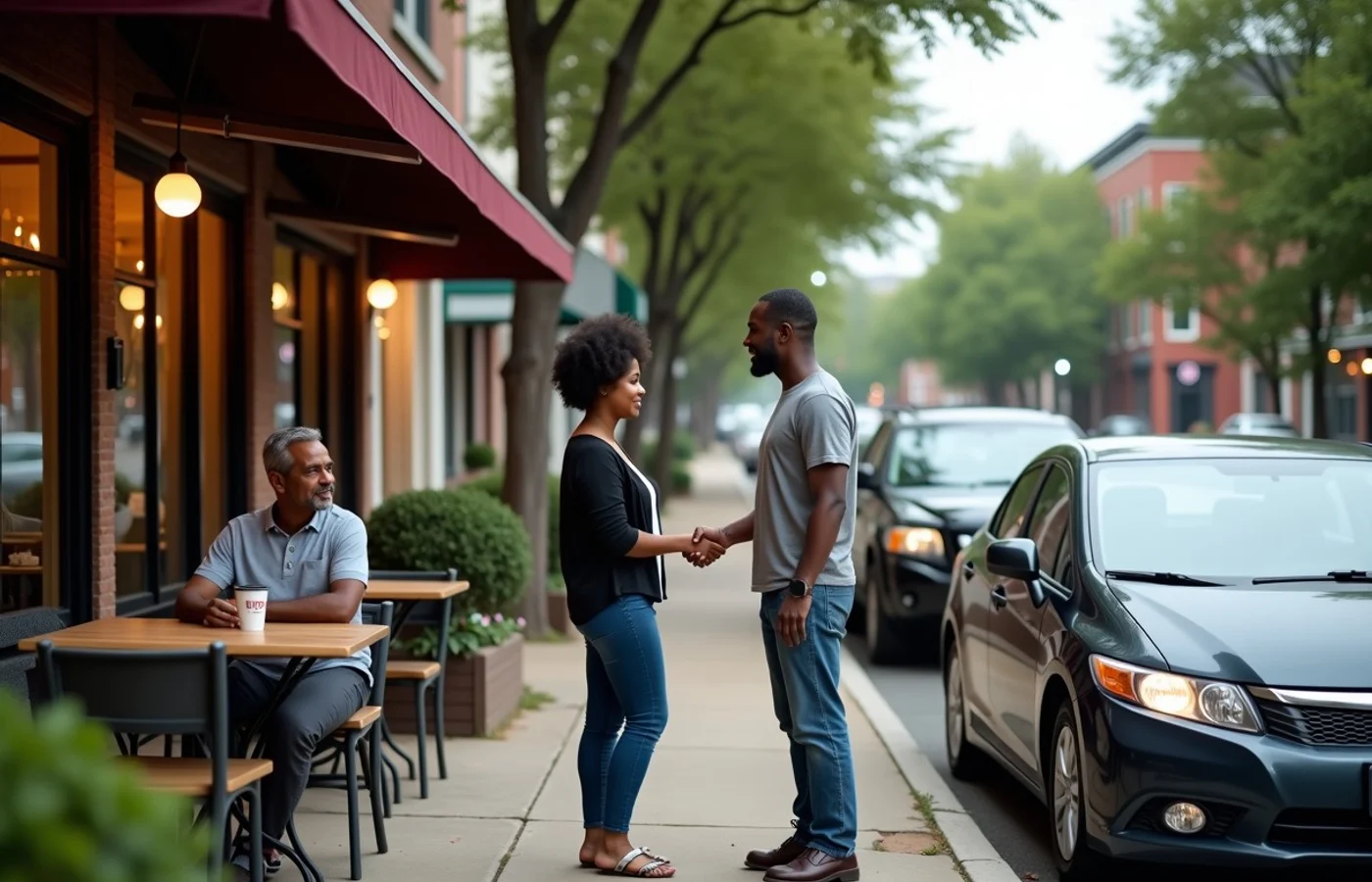
A Chesapeake pin does not describe one simple dating area. Norfolk, Portsmouth, Virginia Beach, and other Hampton Roads communities sit within many adults' normal work and social orbit, yet a short radius cuts them out before profiles ever appear. Distance on an app also fails to show the difference between a quick weekend drive and a weekday trip shaped by traffic, work shifts, or family obligations.
Set an initial distance around trips you would make for a first meeting, then widen it across Hampton Roads when a profile aligns on bigger questions. Someone living in Chesapeake who expects every date to stay within one small part of the city needs a different search from someone open to meeting in Norfolk or Virginia Beach. State your travel limit broadly on your own profile without naming a home neighborhood, workplace, or routine.
Local representation matters more than a broad user count
- Run the same Chesapeake-area search on BLK, BlackPeopleMeet, Hinge, Match, and eharmony. BLK and BlackPeopleMeet are Black-focused services; the other three provide a broader dating pool. Apply the same distance, age range, and relationship goal wherever those controls are offered.
- Read beyond the first few profiles. A service has enough local depth when the search produces several completed profiles with distinct interests, clear locations or travel ranges, and relationship intentions that fit your own.
- Check whether the profiles supply a reason to start a conversation. Empty bios, copied one-line descriptions, and accounts with no current-looking material create the appearance of choice without giving you a basis for contact.
- Inspect the service's block, report, and account-safety controls before sharing a phone number or moving a conversation off the app. A local search is stronger when poor accounts can be removed quickly.
Serious intentions should be visible in the profile
Commitment comes through everyday facts: the relationship you seek, the parts of life that take up time, and the kind of connection that fits that life. State whether you are seeking a committed relationship, dating with intention, or companionship that could grow into romance. Mention a schedule detail, such as free weekends, demanding work hours, or openness to dates across Hampton Roads.
A strong profile also names interests and values with enough detail to invite a grounded response. Private information has no place in this early stage. Skip an exact address, employer, financial details, children's identifying information, and a full account of past relationships.
Good profiles make compatibility easier to investigate

Profile quality matters because online dating begins with incomplete information. Clear, recent photos showing someone's face in everyday settings offer a more credible introduction than distant group shots, heavy filters, or images that give no sense of the account holder. Substantive prompts cover what photos cannot: how someone spends time, what they value, and the relationship they are building.
Look for details that agree with each other. A profile describing a long-term relationship, a busy work schedule, and willingness to travel across Chesapeake and nearby cities provides terms worth discussing. A profile that asks for seriousness while leaving every interest, location cue, and relationship field blank provides almost nothing. You do not owe a message to an account that withholds the basic information needed to judge fit.
Which settings create useful rather than superficial matches?
Distance is a transportation setting, not a measure of romantic fit. Limit the search to parts of Chesapeake and Hampton Roads you can reach without making every date a major trip. Expand the radius when someone meets your relationship criteria and can meet on a compatible schedule. Make distance a firm limit only when travel across the region would repeatedly strain your time, caregiving duties, or work commitments.
Age works best as a range based on life circumstances you are prepared to share, not as a shortcut to assumptions about maturity, health, or desire. Set a firm range when it reflects a clear personal requirement; allow some flexibility when a narrow number range would screen out people whose relationship plans align with yours. Relationship goal deserves firmer treatment. A profile seeking casual dates does not fit a search centered on a committed partnership merely because the account is nearby.
Use recent activity information when a service displays it, since an account that appears active is more likely to lead to an actual exchange. Identity and preference settings direct the search toward people who describe themselves and their interests in ways relevant to you, but they cannot verify someone's background or character. Black-focused services reduce irrelevant browsing from the outset. On broader services, apply available identity and preference settings, then evaluate Chesapeake-area results by profile substance and intent.
When a conversation earns more attention
A promising exchange does more than trade compliments. Both people respond to what the other wrote, ask a grounded question, and give an answer with some detail. Steady replies mean following through at the pace they have established; they do not require constant access to a phone.
Disagreement can reveal more than instant agreement. Someone who can differ politely about pace, dating expectations, or where to meet can hold an adult conversation. Once both people are interested, make a plan: a public meeting, a day and time, and a location that accounts for the Chesapeake-to-Hampton Roads trip. Endless vague future talk, demands to move off the app immediately, or repeated dodging of direct questions merit less of your attention.
Protect the search from low-quality or unsafe accounts
Verification markers, where a service displays them, show that an account completed that service's process; they cannot establish someone's motives. Read the profile, look for consistent details, and use the app's reporting and blocking tools when an account impersonates someone, harasses you, or appears fraudulent. Find those controls before a problem arises.
End contact immediately when someone asks for money, gift cards, banking information, government identification, passwords, or intimate images. Do the same when a match demands your home address or pushes past a stated boundary. Report the account through the service, preserve relevant messages for the report, and do not continue the exchange to obtain an explanation.
The better Chesapeake search is built around a meeting radius you can live with and profiles that put real terms on the table. Black-focused services deserve a place in the comparison, while broader apps and sites earn their place only when their local results contain complete, compatible accounts. Put relationship intent ahead of a glossy profile, and let clear communication narrow the field.
References
- City of Chesapeake official website — City of Chesapeake
- BlackPeopleMeet official website — BlackPeopleMeet
- eharmony official website — eharmony
- Match official website — Match
- Hinge official website — Hinge
- BLK official website — BLK